




 分享
分享产品介绍 评论(0)
物种
Mouse分子别名
Interleukin-10, IL-10, Cytokine synthesis inhibitory factor (CSIF)Accession
P18893表达序列
Ser19-Ser178
表达宿主
HEK293分子量
14-18 kDa (Reducing)
纯度
>95% by SDS-PAGE.内毒素含量
<0.1EU/μg活性
EC50 = 0.25-0.44 ng/ml标记
Unconjugated标签
No Tag性状
Lyophilized Powder缓冲体系
PBS, pH7.4
溶解方法
Reconstitute at 0.1-1 mg/ml according to the size in ultrapure water after rapid centrifugation.
储存条件
·12 months from date of receipt, lyophilized powder stored at -20 to -80℃.
·3 months, -20 to -80℃ under sterile conditions after reconstitution.
·1 week, 2 to 8℃ under sterile conditions after reconstitution.
·Please avoid repeated freeze-thaw cycles.文献引用
Nat Nanotechnol. 2025 Oct;20(10):1526-1538.
Immunity. 2025 May 13;58(5):1306-1326.e7.
Interleukin-10 (IL-10) is a key immunoregulatory cytokine critical for maintaining immune homeostasis and preventing pathological inflammation in mice. Produced by diverse immune cells including T cells, B cells, macrophages, dendritic cells, and innate lymphoid cells (ILCs), IL-10 exerts its pleiotropic effects primarily through the IL-10 receptor complex (IL-10R) and downstream JAK-STAT3 signaling. Mouse models have been instrumental in defining IL‑10's non‑redundant functions: global IL‑10 knockout (IL‑10^(−/−)) mice develop spontaneous, microbiota‑dependent colitis, establishing IL‑10 as a central guardian of intestinal immune homeostasis. Conversely, transgenic and conditional knockout mice have revealed cell‑type‑specific contributions of IL‑10 in regulating inflammation in the lungs, brain, and joint tissues.
Major applications of mouse IL‑10 include: (1) inflammatory bowel disease (IBD) research, where IL‑10^(−/−) mice serve as a widely accepted model for Crohn's disease, enabling preclinical evaluation of microbiota‑based and immune‑modulating therapies; (2) cancer immunotherapy, where engineered IL‑10 expression—such as IL‑10‑mRNA nanoparticles—promotes cytotoxic T cell infiltration and synergizes with immune checkpoint blockade to achieve durable antitumor immunity; (3) autoimmune and inflammatory disease studies, including rheumatoid arthritis, multiple sclerosis, and osteoarthritis, where IL‑10 signaling limits tissue damage and suppresses pathogenic immune responses; and (4) neuroinflammation research, using IL‑10 knockout mice to elucidate microglial resolution mechanisms in the central nervous system.
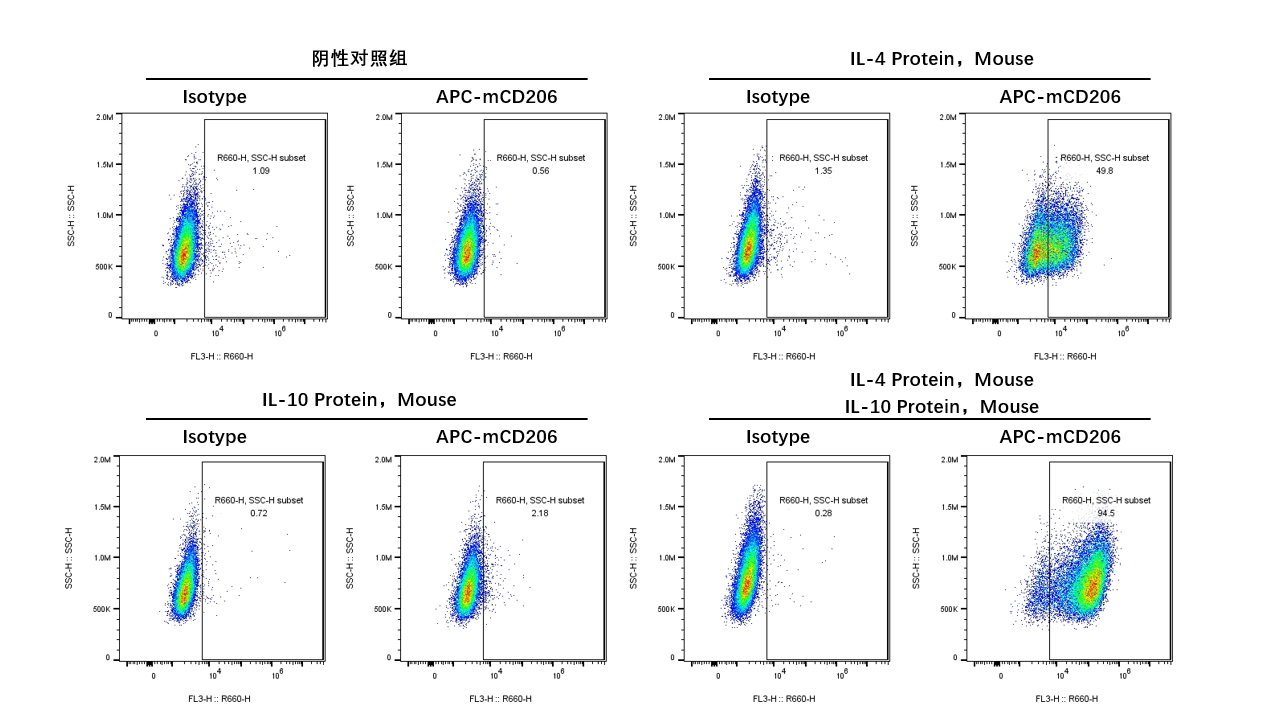
流式分析
M2
生物活性
Measured in a cell proliferation assay using murine MC/9 cells. The EC50 this effect is 0.25-0.44 ng/ml.
电泳
2μg (R: reducing condition, N: non-reducing condition).

评论(0)