


TRANCE/RANK L/TNFSF11 (159aa) Protein, Mouse(RAW264.7破骨专用) STAR
Tumor necrosis factor ligand superfamily member 11,Osteoclast differentiation factor (ODF),Osteoprotegerin ligand (OPGL),Receptor activator of nuclear factor kappa-B ligand (RANKL),TNF-related activation-induced cytokine (TRANCE),CD254


 分享
分享产品介绍 评论(0)
物种
Mouse分子别名
Tumor necrosis factor ligand superfamily member 11; Osteoclast differentiation factor (ODF); Osteoprotegerin ligand (OPGL); Receptor activator of nuclear factor kappa-B ligand (RANKL); TNF-related activation-induced cytokine (TRANCE); CD254Accession
O35235表达序列
Lys158-Asp316, with N-terminal His tag and Flag tag.
表达宿主
HEK293分子量
20-25 kDa (Reducing)
纯度
>95% by SDS-PAGE and HPLC.内毒素含量
<0.1EU/μg活性
EC50 < 5ng/ml标记
Unconjugated标签
Flag Tag, His Tag性状
Lyophilized Powder缓冲体系
PBS, pH7.4
溶解方法
Reconstitute at 0.1-1 mg/ml according to the size in ultrapure water after rapid centrifugation.
储存条件
·12 months from date of receipt, lyophilized powder stored at -20 to -80℃.
·3 months, -20 to -80℃ under sterile conditions after reconstitution.
·1 week, 2 to 8℃ under sterile conditions after reconstitution.
·Please avoid repeated freeze-thaw cycles.文献引用
Nat Rev Drug Discov. 2024 Dec;23(12):939-961.
TNFSF11, also known as Receptor Activator of Nuclear Factor-κB Ligand (RANKL), is a crucial cytokine belonging to the tumor necrosis factor (TNF) superfamily. It is expressed on osteoblasts or T cells and binds to TNFRSF11B (OPG) and TNFRSF11A (RANK) on osteoclasts and precursor cells to regulate their differentiation and proliferation. RANKL plays a vital role in bone remodeling by stimulating osteoclast activity and is essential for maintaining bone homeostasis. In mice, the TNFSF11 gene is located on chromosome 14 and encodes a glycoprotein with an extracellular domain that can be cleaved and released into the bloodstream.
TNFSF11 is a key regulator of osteoclastogenesis and bone resorption. In bone organoid models, TNFSF11 signaling is essential for maintaining the balance between osteoblasts and osteoclasts. By manipulating TNFSF11 levels, researchers can study bone diseases such as osteoporosis and osteopetrosis in a more physiologically relevant context.
TNFSF11 is involved in the development and function of secondary lymphoid organs. In immune organoids, TNFSF11 signaling can influence the formation of lymphoid structures and the activation of immune cells. This makes it a valuable target for studying immune responses and developing new therapeutic strategies for autoimmune diseases.
破骨分化RANKL建议用量 100 ng/mL; M-CSF(货号:UA040128)建议用量50 ng/mL
生物活性
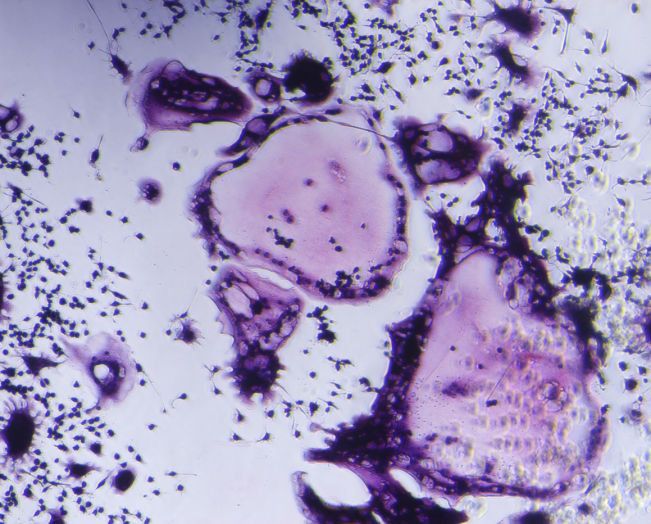
RANK L诱导 5天 后,进行抗酒石酸酸性磷酸酶(TRAP)染色以特异性鉴定破骨细胞。染色完成后,在光学显微镜下观察,成熟的破骨细胞胞浆呈红色或红紫色。
Measured by its ability to induce osteoclast differentiation of RAW 264.7 mouse monocyte/macrophage cells. The EC50 for this effect is less than 5ng/ml.
电泳
2μg (R: reducing condition, N: non-reducing condition).
体积排阻色谱(SEC-HPLC)
>95% as determined by SEC-HPLC.

评论(0)