




 分享
分享产品介绍 评论(0)
物种
Human分子别名
C-X-C motif chemokine 1,GRO-alpha(1-73),Melanoma growth stimulatory activity (MGSA),Neutrophil-activating protein 3 (NAP-3)Accession
P09341表达序列
Ala35-Asn107表达宿主
E.coli分子量
7.8kDa纯度
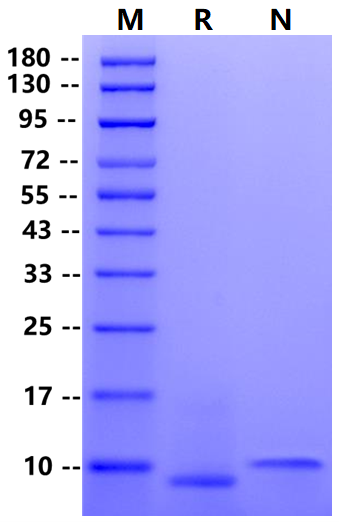
>95% by SDS-PAGE内毒素含量
<0.1EU/μg标记
Unconjugated标签
No Tag性状
Lyophilized Powder缓冲体系
PBS, pH7.4溶解方法
Reconstitute at 0.1-1 mg/ml according to the size in ultrapure water after rapid centrifugation.储存条件
· 12 months from date of receipt, lyophilized powder stored at -20 to -80℃.
· 3 months, -20 to -80℃ under sterile conditions after reconstitution.
· 1 week, 2 to 8℃ under sterile conditions after reconstitution.
· Please avoid repeated freeze-thaw cycles.文献引用
1. Dhawan P, et al. Role of CXCL1 in tumorigenesis of melanoma. J Leukoc Biol. 2002 Jul;72(1):9-18.
2. Haskill S, et al. Identification of three related human GRO genes encoding cytokine functions. Proc Natl Acad Sci U S A. 1990 Oct;87(19):7732-6.
3. Moser B, et al. Neutrophil-activating properties of the melanoma growth-stimulatory activity. J Exp Med. 1990 May 1;171(5):1797-802.
4. Vries MH, et al. CXCL1 promotes arteriogenesis through enhanced monocyte recruitment into the peri-collateral space. Angiogenesis. 2015 Apr;18(2):163-71.
CXCL1, also known as GRO-α, is a polypeptide that is initially isolated from human melanoma cells. CXCL1 acts as a key chemoattractant for neutrophils by binding specifically to its corresponding G-protein-coupled receptor CXCR2. CXCL1 modulates angiogenesis, tumorigenesis, and wound healing. In general, CXCL1 levels are extremely low under normal physiological conditions and greatly increased during inflammatory conditions. CXCL1 can also induce recruitment of regulatory T cells (Treg) and MSCs into the tumor niche. Another no-less-important property of CXCL1 is its ability to induce angiogenesis.
电泳
2μg (R: reducing condition, N: non-reducing condition).

评论(0)