




 分享
分享产品介绍 评论(0)
物种
Human分子别名
ACP3,PAP,5'-NT,ACP-3,Prostatic Acid PhosphataseAccession
P15309表达序列
Lys33-Asp386, with C-terminal His Tag
表达宿主
HEK293分子量
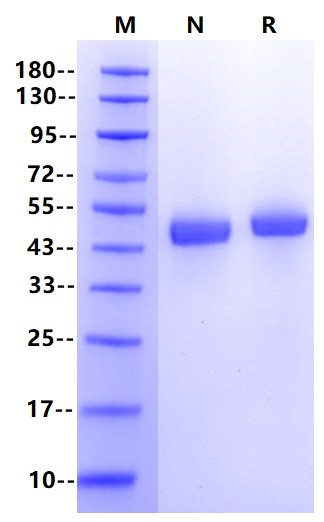
45-50kDa (Reducing)
纯度
>95% by SDS-PAGE
内毒素含量
<0.1EU/μg活性
Measured by its ability to cleave a substrate, p-Nitrophenyl phosphate (pNPP). The specific activity is >300,000 pmol/min/μg.标记
Unconjugated标签
His Tag性状
Lyophilized Powder缓冲体系
PBS, 5% Trehalose, pH7.4
溶解方法
Reconstitute at 0.1-1 mg/ml according to the size in ultrapure water after rapid centrifugation.
储存条件
· 12 months from date of receipt, lyophilized powder stored at -20 to -80℃.
· 3 months, -20 to -80℃ under sterile conditions after reconstitution.
· 1 week, 2 to 8℃ under sterile conditions after reconstitution.
· Please avoid repeated freeze-thaw cycles.
Prostatic acid phosphatase (PAP, or ACPP), also known as prostatic specific acid phosphatase (PSAP), is an enzyme produced by the prostate. As a non-specific phosphomonoesterase, Prostatic acid phosphatase is synthesized and secreted into seminal plasma under androgenic control. The enzyme is a dimer of molecular weight around 100 kDa. Prostatic Acid Phosphatase (ACPP) catalyzes the hydrolysis of a variety of phosphate monoesters, including phosphorylated proteins. The activity optimum of ACPP is in the pH range of 4-6, and the activity is inhibited by L(+)-tartrate. ACPP expression levels are highest in the prostate, with much lower expression in most other tissues. ACPP is a type I integral membrane protein of the plasma membrane and lysosomes, and a secreted form also exists. The concentration of ACPP is elevated in the circulation of prostate cancer patients, making the enzyme a marker for the progression of prostate cancer. Cellular ACPP has been shown to be a protein tyrosine phosphatase. Protein substrates include the epidermal growth factor receptor and HER-2. Cellular ACPP is considered to function as a tumor suppressor.
电泳
- 2μg (R: reducing conditions, N: non-reducing conditions).

评论(0)