





 分享
分享产品介绍 评论(0)
物种
Human分子别名
Erythropoietin, EPO;Erythropoietin, Epoetin, EPOAccession
P01588表达序列
Ala28-Arg193表达宿主
CHO分子量
28-40 kDa(Reducing)
纯度
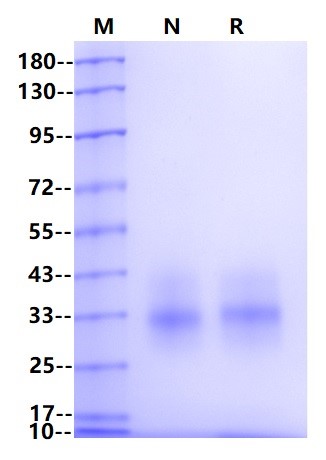
>95%, by SDS-PAGE under reducing conditions内毒素含量
<0.1EU/μg标记
Unconjugated标签
No Tag性状
Lyophilized Powder缓冲体系
PBS, pH7.4
溶解方法
Reconstitute at less than 1 mg/mL according to the size in ultrapure water after rapid centrifugation .
储存条件
· 12 months from date of receipt, lyophilized powder stored at -20 to -80℃.
· 3 months, -20 to -80℃ under sterile conditions after reconstitution.
· 1 week, 2 to 8℃ under sterile conditions after reconstitution.
· Please avoid repeated freeze-thaw cycles.
Erythropoietin (EPO) is a glycoprotein hormone that is principally known for its role in erythropoiesis, where it is responsible for stimulating proliferation and differentiation of erythroid progenitor cells. Erythropoietin is a member of the EPO/TPO family. It is a secreted, glycosylated cytokine composed of four alpha helical bundles. The differentiation of CFU-E (Colony Forming Unit-Erythroid) cells into erythrocytes can only be accomplished in the presence of EPO. Physiological levels of EPO in adult mammals are maintained primarily by the kidneys, whereas levels in fetal or neonatal mammals are maintained by the liver. EPO also can exert various non-hematopoietic activities, including vascularization and proliferation of smooth muscle, neural protection during hypoxia, and stimulation of certain B cells. Genetic variation in erythropoietin is associated with susceptbility to microvascular complications of diabetes type 2. These are pathological conditions that develop in numerous tissues and organs as a consequence of diabetes mellitus. They include diabetic retinopathy, diabetic nephropathy leading to end-stage renal disease, and diabetic neuropathy.
生物活性
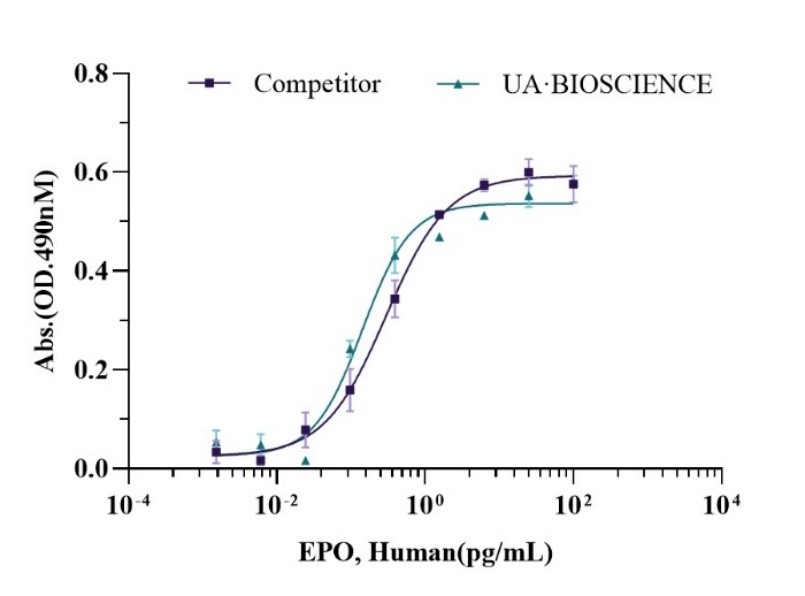
- EC50 < 0.5ng/ml, measured in a cell proliferation assay using TF-1 human erythroleukemic cells
电泳
- EPO, Human,1μg on SDS-PAGE under Non-reducing and reducing condition. The purity is greater than 95%.



评论(0)