




 分享
分享产品介绍 评论(0)
物种
Human分子别名
TIMD3,HAVCR2,FLJ14428,KIM3Accession
Q8TDQ0表达序列
Ser22-Arg200, with C-terminal Human IgG1 Fc
表达宿主
HEK293分子量
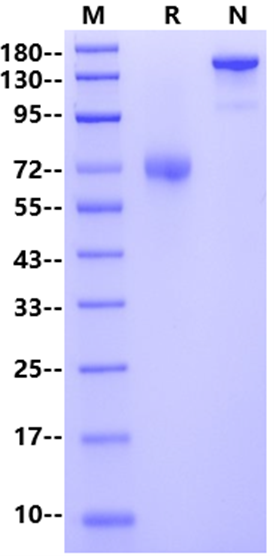
65-80kDa
纯度
>95% by SDS-PAGE内毒素含量
<0.1EU/μg标记
Unconjugated性状
Lyophilized Powder缓冲体系
PBS, pH7.4
溶解方法
Reconstitute at 0.1-1 mg/ml according to the size in ultrapure water after rapid centrifugation.
储存条件
· 12 months from date of receipt, lyophilized powder stored at -20 to -80℃.
· 3 months, -20 to -80℃ under sterile conditions after reconstitution.
· 1 week, 2 to 8℃ under sterile conditions after reconstitution.
· Please avoid repeated freeze-thaw cycles.
文献引用
1、Geng H. et al. (2006) Soluble form of T cell Ig mucin 3 is an inhibitory molecule in T cell-mediated immune response. J Immunol. 176(3): 1411-1420.
2、Anderson A C. et al. (2006) TIM-3 in autoimmunity. Curr Opin Immunol. 18(6): 665-669.
3、Anderson D E. (2007) TIM-3 as a therapeutic target in human inflammatory diseases. Expert Opin Ther Targets. 11(8): 1005-1009.
4、Pan H F. et al. (2010) TIM-3 as a new therapeutic target in systemic lupus erythematosus. Mol Biol Rep. 37(1): 395-398.
- TIM-3 (T cell immunoglobulin and mucin domain-3), also known as HAVCR2, is a 60 kDa member of the TIM family of immune regulating molecules. TIMs are type I transmembrane glycoproteins with one Ig-like V-type domain and a Ser/Thr-rich mucin stalk region. Mature mouse TIM-3 consists of a 174 amino acid (aa) extracellular domain (ECD), a 21 aa transmembrane segment, and a 67 aa cytoplasmic tail. Within the ECD, mouse TIM-3 shares 58% and 75% aa sequence identity with human and rat TIM-3, respectively. Recently, the identification of Galectin-9 as a ligand for TIM-3 has established the TIM-3-Galectin-9 pathway as an important regulator of Th1 immunity and tolerance induction. Engagement of Tim-3 by its ligand galectin-9 negatively regulates IFN-gamma secretion and influences the ability to induce T cell tolerance in both mice and man. The TIM-3-galectin-9 pathway could underlie chronic autoimmune disease states, such as multiple sclerosis. Numerous studies have demonstrated that Tim-3 influences autoimmune diseases, including diabetes and multiple sclerosis, and its role in other inflammatory diseases including allergies and cancer is beginning to become clear. In the tumor rejection model, the soluble form of Tim-3 (sTim-3) significantly impaired T cell antitumor immunity, evidenced by decreased antitumor CTL activity and reduced amount of tumor-infiltrating lymphocytes in the tumor.
电泳
- 1μg (R: reducing conditions, N: non-reducing conditions).
ELISA
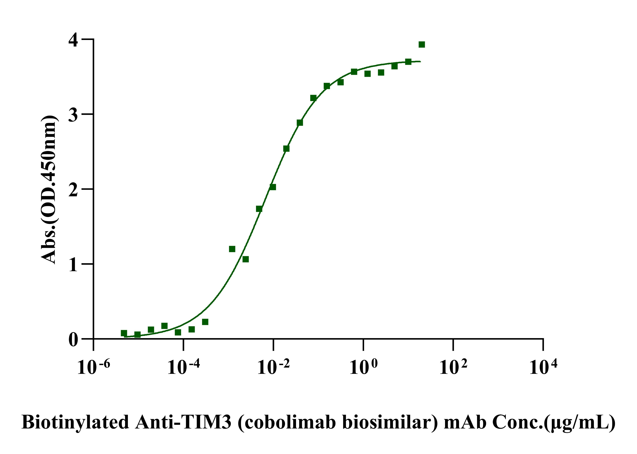
Immobilized TIM-3/HAVCR2 Fc Chimera Protein, Human (Cat. No. UA010369) at 2.0μg/mL (100μL/well) can bind Biotinylated Anti-TIM3 (cobolimab biosimilar) mAb with EC50 of 5.1-8.6 ng/ mL.

评论(0)