




 分享
分享产品介绍 评论(0)
宿主来源
Rat分子别名
Lymphocyte antigen 76; Ly76; Ly-76; Ter119细胞定位
Cell membraneAccession
104231克隆号
TER-119抗体类型
Rat mAb抗体同种型
IgG2b,k反应种属 ?
Ms阳性样本
C57BL/6 mouse bone marrow纯化方式
Protein G浓度
0.2 mg/ml标记
Biotin性状
Liquid缓冲体系
PBS pH7.4, 0.03% Proclin 300
储存条件
12 months from date of receipt / reconstitution, 2 to 8 °C as supplied.
应用
FCM
稀释度
应用 稀释度 推荐种属 FCM 1.25μl per million cells in 100μl volume Ms
The TER-119 protein is one of the most specific and important cell surface markers for the murine erythroid lineage. It specifically recognizes an antigen associated with glycophorin A on the red blood cell membrane. Throughout erythroid development, from early basophilic erythroblasts to late-stage reticulocytes, it is consistently highly expressed, making it a critical molecular marker for identifying, sorting, and studying murine erythroid cells (such as erythrocytes, progenitor cells, and precursors). This protein belongs to the Ly-6 antigen superfamily, and its antibody (e.g., the TER-119 monoclonal antibody) is an indispensable tool in experimental hematology for the isolation and identification of red blood cells via flow cytometry or immunomagnetic beads, as well as for research into blood diseases like anemia and leukemia.
流式分析
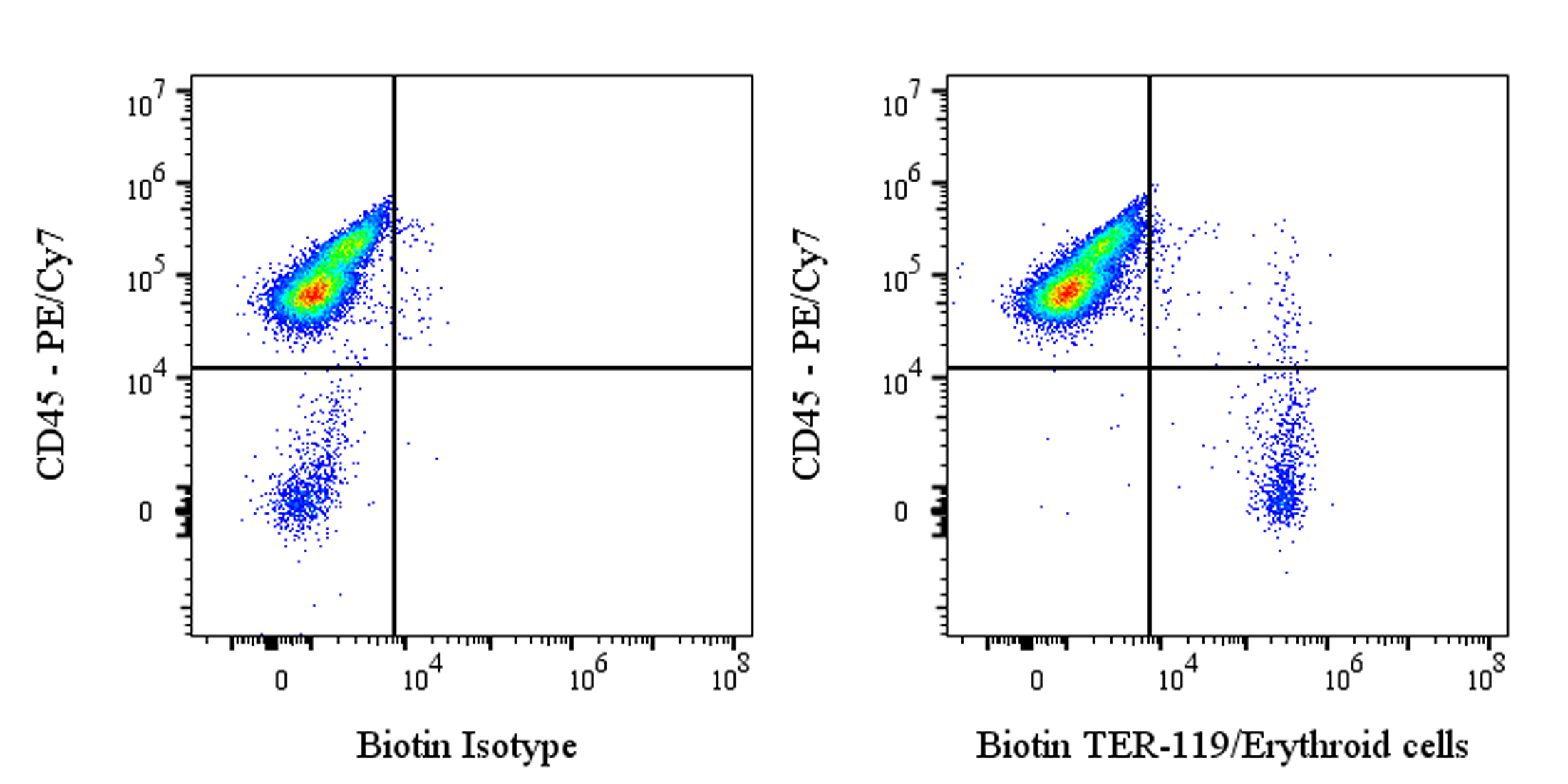
Flow cytometric analysis of Mouse TER-119/Erythroid cells expression on C57BL/6 mouse bone marrow. C57BL/6 mouse bone marrow were stained with PE/Cy7 Rat Anti-Mouse CD45 Antibody and either Biotin Rat IgG2b, k Isotype Control (S0B8274, left panel) or SDT Biotin Rat Anti-Mouse TER-119/Erythroid cells Antibody (right panel) at 1.25 μl/test followed by Sav-iFluor 488. Total viable cells, as determined by Fixable Viability Dye 452 (S0D0021), were used for analysis. Flow cytometry and data analysis were performed using Agilent NovoCyte Quanteon and FlowJo™ software.

评论(0)