




 分享
分享产品介绍 评论(0)
产品规格
物种
Human分子别名
LFABPAccession
P07148表达序列
Met1-Ile127, with N-terminal 8*His MHHHHHHHHMSFSGKYQLQSQENFEAFMKAIGLPEELIQKGKDIKGVSEIVQNGKHFKFTITAGSKVIQNEFTVGEECELETMTGEKVKTVVQLEGDNKLVTTFKNIKSVTELNGDIITNTMTLGDIVFKRISKRI表达宿主
E.coli分子量
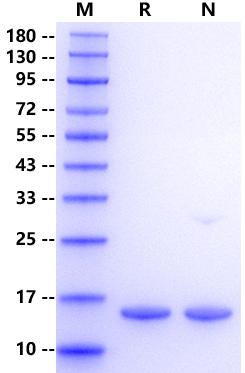
16kDa (Reducing)纯度
>95% by SDS-PAGE & RP-HPLC内毒素含量
<1EU/μg标记
Unconjugated标签
His Tag性状
Lyophilized Powder溶解方法
Reconstitute at 0.1-1 mg/ml according to the size in ultrapure water after rapid centrifugation.储存条件
· 12 months from date of receipt, -20 to -70 °C as supplied.
· 6 months, -20 to -70 °C under sterile conditions after reconstitution.
· 1 week, 2 to 8 °C under sterile conditions after reconstitution.
· Please avoid repeated freeze-thaw cycles.
背景介绍
- FABP1 (LFABP) has been initially characterised in the liver (thus its name) but is also expressed in small intestine (duodenum and jejunum). FABP1 appears to be the most promiscuous FABP as it was reported to bind a variety of small molecules in addition to fatty acids including bile acids, lysophosphatidic acid, prostaglandins, fatty acyl-CoA, bilirubin and heme. FABP1 is a PPARα target gene. While some studies suggested that FABP1 might be involved in the delivery of ligands for PPARα activation in the nucleus, FABP1-deficient mice showed normal regulation of PPARα target genes regulation. FABP1 was reported to enhance apoB-lipoprotein secretion, which would suggest involvement of this protein in the delivery of fatty acids to the ER for esterification into lipoprotein-destined TG. Hepatic fatty acid oxidation is also diminished in fasted FABP1 knockout mice, which implies deficient transport of fatty acids to the oxidative pathway. Interestingly, no accumulation of intracellular TG accompanied attenuation of fatty acid oxidation even when the mice were challenged with a high-fat diet.
电泳
- 2μg(R: reducing conditions, N: non-reducing conditions)

评论(0)