




 分享
分享产品介绍 评论(0)
物种
Human分子别名
5'-nucleotidase (5'-NT), Acid phosphatase 3, Ecto-5'-nucleotidase, Protein tyrosine phosphatase ACP3, Thiamine monophosphatase (TMPase), ACP3, ACPPAccession
P15309表达序列
Protein sequence(P15309 Lys33-Asp386, with C-10*His)
KELKFVTLVFRHGDRSPIDTFPTDPIKESSWPQGFGQLTQLGMEQHYELGEYIRKRYRKFLNESYKHEQVYIRSTDVDRTLMSAMTNLAALFPPEGVSIWNPILLWQPIPVHTVPLSEDQLLYLPFRNCPRFQELESETLKSEEFQKRLHPYKDFIATLGKLSGLHGQDLFGIWSKVYDPLYCESVHNFTLPSWATEDTMTKLRELSELSLLSLYGIHKQKEKSRLQGGVLVNEILNHMKRATQIPSYKKLIMYSAHDTTVSGLQMALDVYNGLLPPYASCHLTELYFEKGEYFVEMYYRNETQHEPYPLMLPGCSPSCPLERFAELVGPVIPQDWSTECMTTNSHQGTEDSTDGGGGSHHHHHHHHHH表达宿主
HEK293分子量
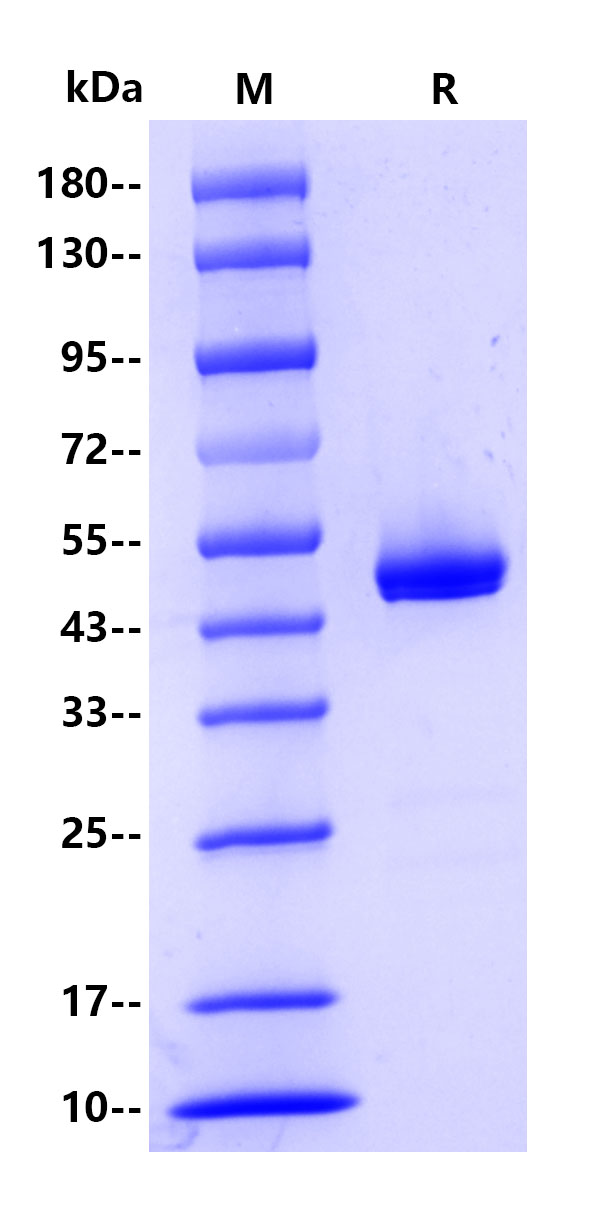
Theoretical: 42.6kDa Actual: 50kDa纯度
>95% by SDS-PAGE
内毒素含量
<1EU/μg标记
Unconjugated性状
Lyophilized Powder缓冲体系
Lyophilized from a 0.2 μm filtered solution of 0.2M PBS, pH7.4.溶解方法
Reconstitute no more than 0.1 mg/mL according to the size in deionized water after rapid centrifugation.储存条件
· 12 months from date of receipt, -20 to -70 °C as supplied.
· 6 months, -20 to -70 °C under sterile conditions after reconstitution.
· 1 week, 2 to 8 °C under sterile conditions after reconstitution.
· Please avoid repeated freeze-thaw cycles.
Prostatic acid phosphatase (PAP), also prostatic specific acid phosphatase (PSAP), is an enzyme produced by the prostate. It may be found in increased amounts in men who have prostate cancer or other diseases. PSAP was used to monitor and assess progression of prostate cancer until the introduction of prostate specific antigen (PSA), which has now largely displaced it. Subsequent work, suggested that it has a role in prognosticating intermediate and high-risk prostate cancer, and led to renewed interest in it as a biomarker.
电泳
- 2μg (R: reducing conditions)

评论(0)