




 分享
分享产品介绍 评论(0)
物种
Human分子别名
TR2, HveAAccession
Q92956表达序列
Protein sequence(Q92956, Leu39-Val202, with C-10*His) LPSCKEDEYPVGSECCPKCSPGYRVKEACGELTGTVCEPCPPGTYIAHLNGLSKCLQCQMCDPAMGLRASRNCSRTENAVCGCSPGHFCIVQDGDHCAACRAYATSSPGQRVQKGGTESQDTLCQNCPPGTFSPNGTLEECQHQTKCSWLVTKAGAGTSSSHWVGGGGSHHHHHHHHHH
表达宿主
HEK293分子量
Theoretical:19.0kDa Actual:30, 43kDa纯度
>95% by SDS-PAGE标签
with C-10*His性状
Lyophilized Powder缓冲体系
Lyophilized from a 0.2 μm filtered solution of 0.2M PBS, pH7.4.溶解方法
Reconstitute no more than 1 mg/mL according to the size in deionized water after rapid centrifugation.储存条件
12 months from date of receipt, -20 to -70 °C as supplied. 6 months, -20 to -70 °C under sterile conditions after reconstitution. 1 week, 2 to 8 °C under sterile conditions after reconstitution. Please avoid repeated freeze-thaw cycles.
Herpesvirus entry mediator (HVEM), also known as tumor necrosis factor receptor superfamily member 14 (TNFRSF14), is a human cell surface receptor of the TNF-receptor superfamily. It is also known as CD270 in the cluster of differentiation classification. Moreover, it is also referred to as ATAR (another TRAF-associated receptor). The cytoplasmic region of this receptor was found to bind to several TNF receptor associated factor (TRAF) family members, which may mediate the signal transduction pathways that activate the immune response. Mutations in this gene have been recurrently been associated to cases of diffuse large B-cell lymphoma and pediatric-type follicular lymphoma. This receptor was identified as a cellular mediator of herpes simplex virus (HSV) entry. Binding of HSV viral envelope glycoprotein D (gD) to this receptor protein has been shown to be part of the viral entry mechanism.

生物活性
- 2μg(R: reducing conditions)
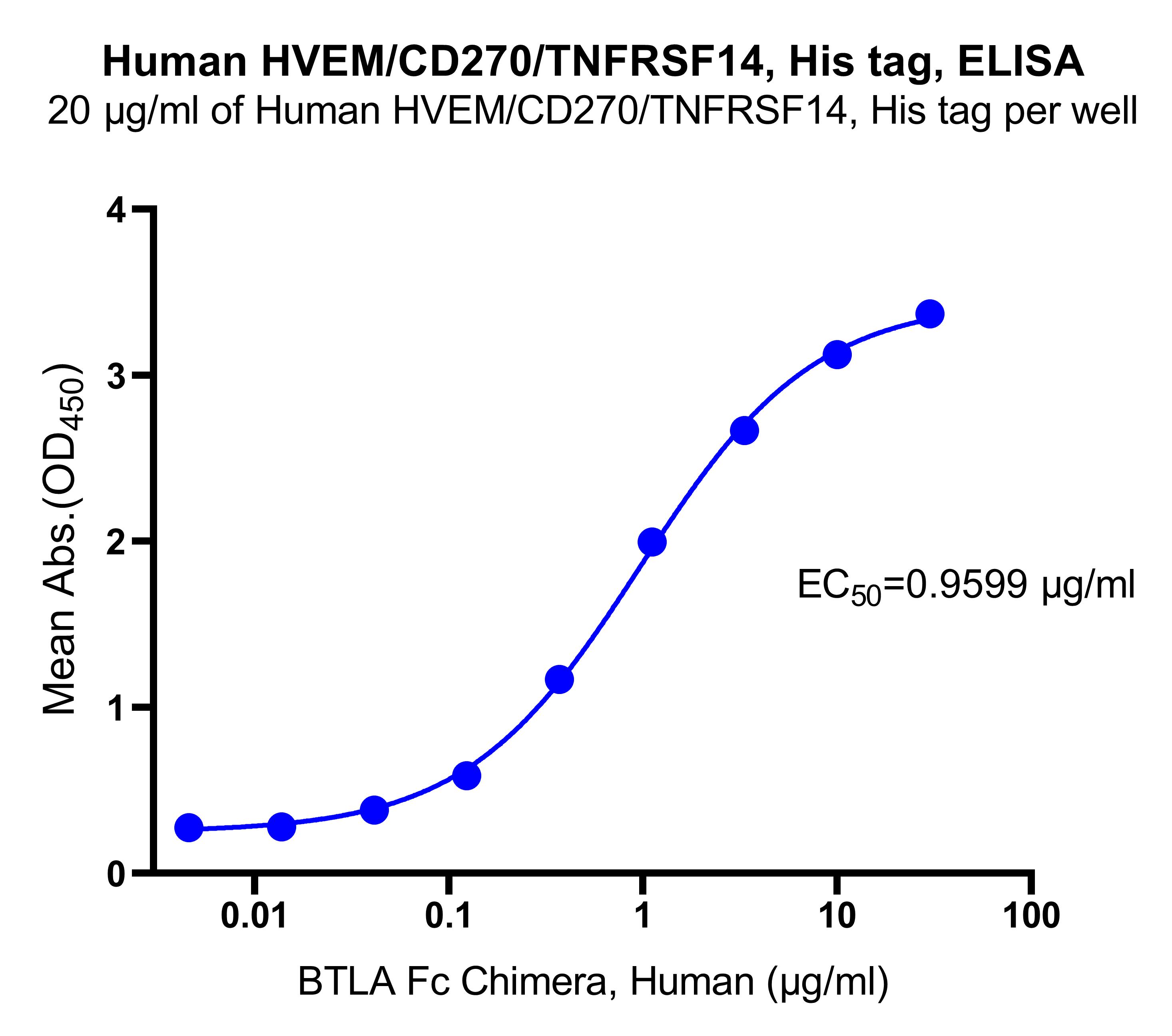
Immobilized Human HVEM/CD270/TNFRSF14, His tag at 20 μg/mL (50 μL/well) can bind BTLA Fc Chimera, Human (UA010754) with EC50 of 0.8393-1.108 μg/ml.

评论(0)