




 分享
分享产品介绍 评论(0)
物种
Human分子别名
Erythrocyte receptor, LFA-2, LFA-3 receptor, Rosette receptor, T-cell surface antigen T11/Leu-5Accession
P06729表达序列
Protein sequence(P06729, Lys25-Asp209, with C-10*His) KEITNALETWGALGQDINLDIPSFQMSDDIDDIKWEKTSDKKKIAQFRKEKETFKEKDTYKLFKNGTLKIKHLKTDDQDIYKVSIYDTKGKNVLEKIFDLKIQERVSKPKISWTCINTTLTCEVMNGTDPELNLYQDGKHLKLSQRVITHKWTTSLSAKFKCTAGNKVSKESSVEPVSCPEKGLDGGGGSHHHHHHHHHH
表达宿主
HEK293分子量
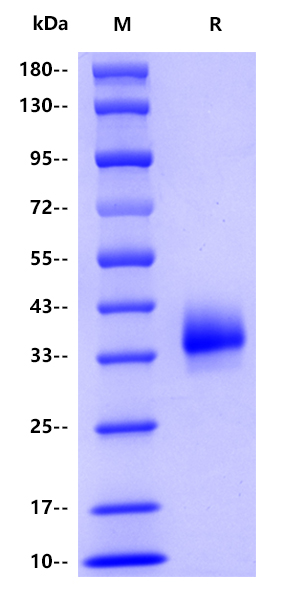
Theoretical:22.9kDa Actual:35kDa纯度
>95% by SDS-PAGE标签
with C-10*His性状
Lyophilized Powder缓冲体系
Lyophilized from a 0.2 μm filtered solution of 0.2M PBS, pH7.4.溶解方法
Reconstitute no more than 1 mg/mL according to the size in deionized water after rapid centrifugation.储存条件
12 months from date of receipt, -20 to -70 °C as supplied. 6 months, -20 to -70 °C under sterile conditions after reconstitution. 1 week, 2 to 8 °C under sterile conditions after reconstitution. Please avoid repeated freeze-thaw cycles.
CD2 (cluster of differentiation 2) is a cell adhesion molecule found on the surface of T cells and natural killer (NK) cells. It has also been called T-cell surface antigen T11/Leu-5, LFA-2, LFA-3 receptor, erythrocyte receptor and rosette receptor. It interacts with other adhesion molecules, such as lymphocyte function-associated antigen-3 (LFA-3/CD58) in humans, or CD48 in rodents, which are expressed on the surfaces of other cells. In addition to its adhesive properties, CD2 also acts as a co-stimulatory molecule on T and NK cells. CD2 is a specific marker for T cells and NK cells, and can therefore be used in immunohistochemistry to identify the presence of such cells in tissue sections. The great majority of T cell lymphomas and leukaemias also express CD2, making it possible to use the presence of the antigen to distinguish these conditions from B cell neoplasms.
生物活性
- 2μg(R: reducing conditions)

评论(0)