




 分享
分享产品介绍 评论(0)
物种
Human分子别名
Bcl2-L-1, Apoptosis regulator Bcl-X, BCL2L1, BCLX, BCL2LAccession
Q07817表达序列
Protein sequence(Q07817, Met1-Phe210, with C-10*His) MSQSNRELVVDFLSYKLSQKGYSWSQFSDVEENRTEAPEGTESEMETPSAINGNPSWHLADSPAVNGATGHSSSLDAREVIPMAAVKQALREAGDEFELRYRRAFSDLTSQLHITPGTAYQSFEQVVNELFRDGVNWGRIVAFFSFGGALCVESVDKEMQVLVSRIAAWMATYLNDHLEPWIQENGGWDTFVELYGNNAAAESRKGQERFGGGGSHHHHHHHHHH表达宿主
HEK293分子量
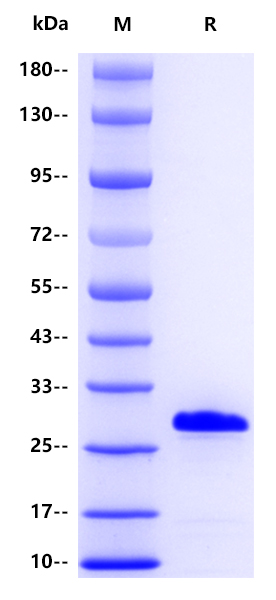
Theoretical:25.2kDa Actual:29kDa纯度
>95% by SDS-PAGE
内毒素含量
<1EU/μg标记
Unconjugated标签
His Tag性状
Lyophilized Powder缓冲体系
Lyophilized from a 0.2 μm filtered solution of 0.2M PBS, 1mM EDTA, pH7.4.溶解方法
Reconstitute no more than 1 mg/mL according to the size in deionized water after rapid centrifugation.储存条件
12 months from date of receipt, -20 to -70 °C as supplied. 6 months, -20 to -70 °C under sterile conditions after reconstitution. 1 week, 2 to 8 °C under sterile conditions after reconstitution. Please avoid repeated freeze-thaw cycles.
B-cell lymphoma-extra large (Bcl-xL) is a transmembrane molecule in the mitochondria. It is a member of the Bcl-2 family of proteins, and acts as an anti-apoptotic protein by preventing the release of mitochondrial contents such as cytochrome c, which leads to caspase activation and ultimately, programmed cell death. Bcl-xL dysfunction in mice can cause ineffective production of red blood cells, severe anemia, hemolysis, and death. This protein has also been shown as a requirement for heme production[6] and in erythroid lineage, Bcl-xL is a major survival factor responsible for an estimated half of the total survival "signal" proerythroblasts must receive in order to survive and become red cells. Similar to other Bcl-2 family members, Bcl-xL has been implicated in the survival of cancer cells by inhibiting the function of p53, a tumor suppressor. In cancerous mouse cells, those which contained Bcl-xL were able to survive while those that only expressed p53 died in a small period of time.
电泳
2μg(R: reducing conditions)

评论(0)